Most people come to Marrakech for the medina and never realise there is a 4,000m mountain range an hour away. One riding day changes the whole trip.
Published
Marrakech sits at 466m on a flat plain. Ninety minutes south, the road ends at Imlil at 1,740m, and above that the High Atlas rises to Toubkal at 4,167m. The highest peak in North Africa. Very few cities in the world put a mountain range of that scale that close to an international airport, and almost nobody visiting Marrakech for four days realises it is there.
One riding day is enough to see it. You leave your riad after breakfast and you are back for dinner in the medina, and in between you have ridden mule paths through villages where the way of life has not changed much in a century.
How the day actually works
Pickup from your riad or hotel between 8 and 9am. Transfer south. An hour to the Kik Plateau and Asni, ninety minutes to Imlil depending on the route. Bike fit and a briefing at the trailhead. Four to five hours of riding with a proper lunch stop in the middle. Back in Marrakech by late afternoon, usually between 4 and 6pm.
That timing is deliberate. It leaves you an evening in the city, which is when Marrakech is at its best — Jemaa el-Fna fills up after dark, the food stalls open, and the temperature becomes pleasant. A riding day does not cost you a night out.
Which day ride suits you
There are three genuinely different days available, and they suit very different riders.
| Ride | Grade | Who it is for |
|---|---|---|
| Day mountain bike tour from Marrakech | Easy–moderate | Anyone who rides occasionally. Dirt roads, wide tracks, one long descent. |
| e-Bike day tour | Beginner | Mixed-ability pairs, anyone who has not ridden in a while, or riding in the heat of June and September. |
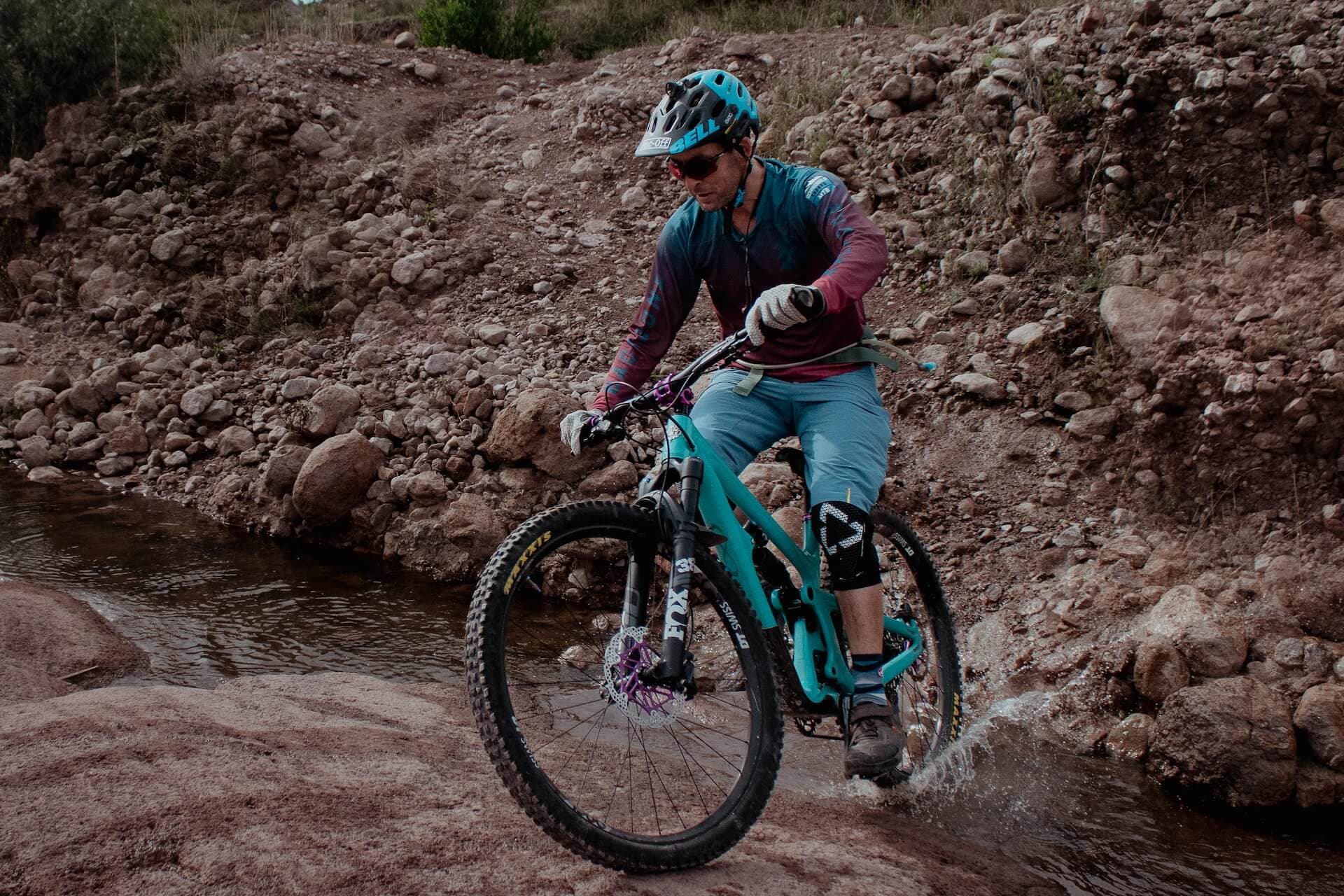
| Imlil enduro day tour | Advanced | Experienced riders only. Steep, loose, technical, with real consequences. |
The honest advice is that most people on a city break want the first or second. The enduro day is genuinely advanced. We decline bookings for it regularly, and we would rather do that than have somebody having a bad time on an exposed descent above the Azzaden.
Where you actually ride
Three areas are within day-trip range, and they are not interchangeable.
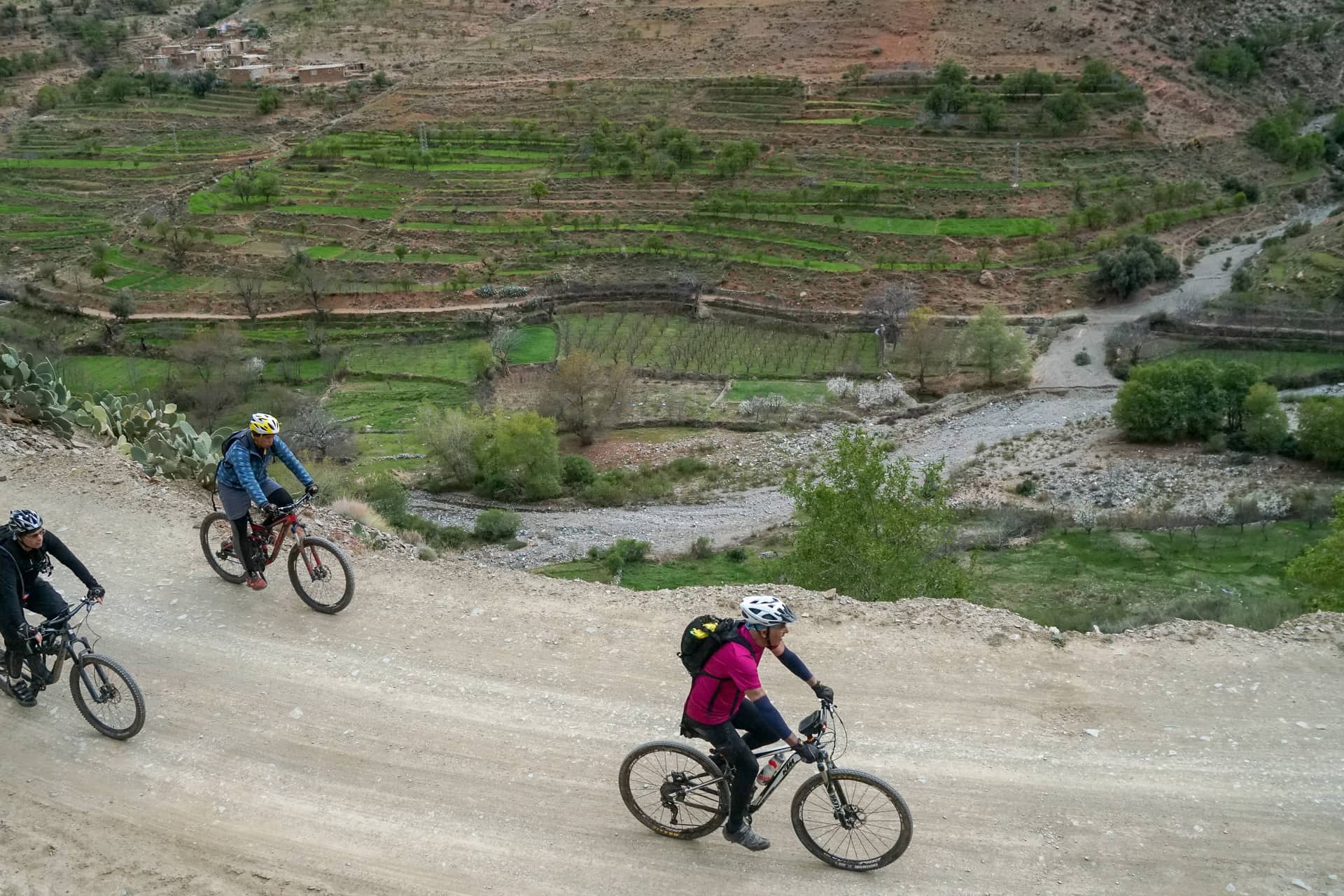
The Kik Plateau is the high open ground between Asni and Ouirgane — fast, rolling dirt roads with the whole range laid out beside you. It is the best introduction to riding here and it works on any bike. This is where most first-timers go.
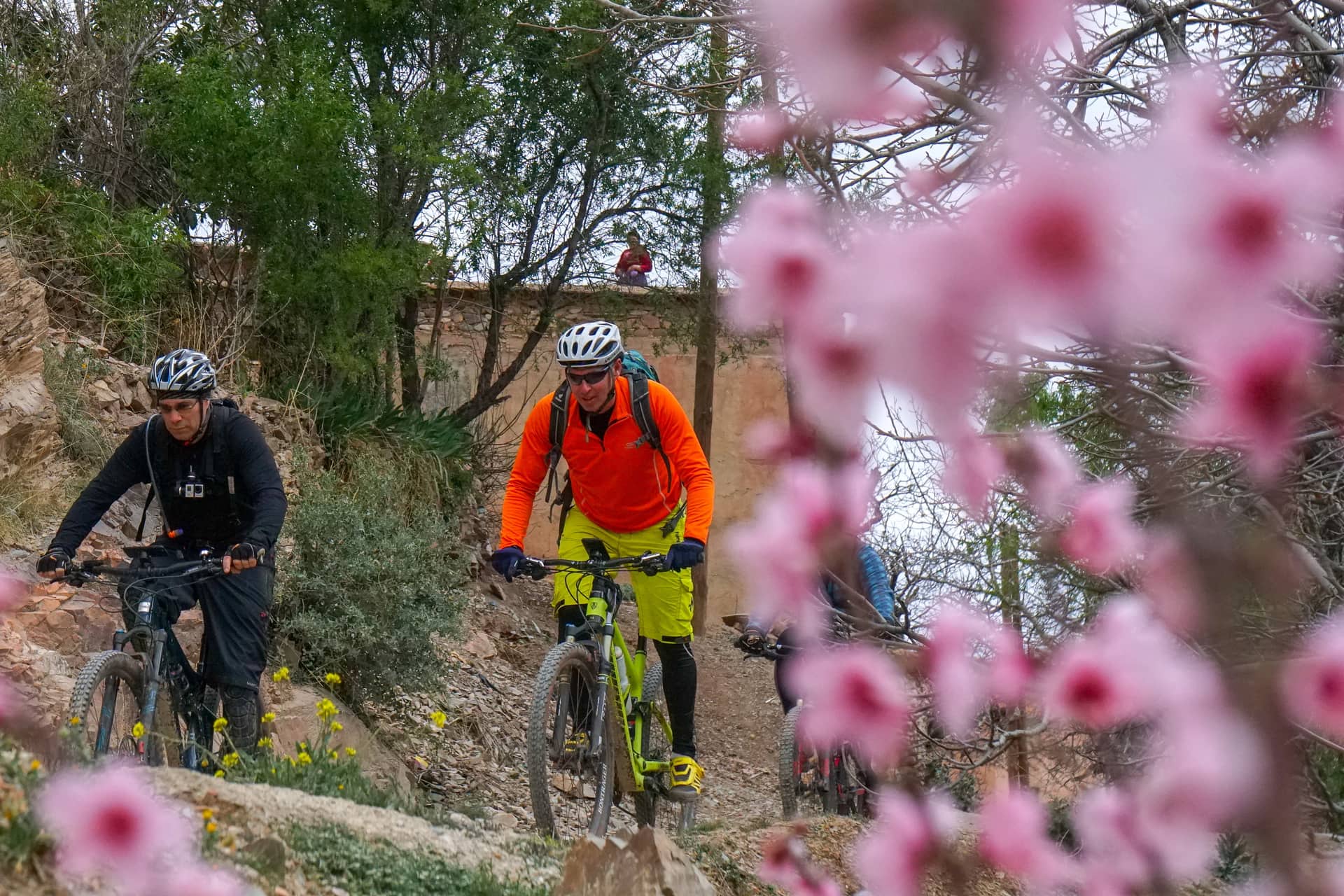
Imlil and the Azzaden valley are steeper, greener and more dramatic: walnut terraces, irrigation channels, stone villages stacked on the hillside, and mule paths that were built for feet rather than wheels. Better riding, more demanding, and Toubkal at the head of the valley.
The Agafay desert is the other direction — stony hamada rather than sand, forty minutes from the city, and startlingly empty. It is the flattest option and the one that works when the mountains are under snow. It also happens to photograph better than anywhere else near Marrakech.
What the day gets you that the city does not
Marrakech is a wonderful city and it is also intense, transactional and crowded in ways that wear people down by day three. The medina is a place where somebody wants to sell you something roughly every ninety seconds.
The valleys are the opposite. Nobody is selling anything. Children run alongside for a hundred metres and wave. You stop at a village for mint tea and the transaction is that you drink the tea. It reorders the whole trip, and people frequently tell us the riding day is what they end up describing when they get home — not the souks.
Fitting it into a short trip
For a four-day Marrakech break, ride on day two or three. Day one you are tired from travelling and want to walk around the medina. The last day you want a slow morning and a departure that is not stressful. The middle is where the riding goes.
If you have five days or more, consider a 2-day Atlas Mountains MTB tour instead of a single day. The additional thing you get is the evening — dinner in a village house, the light going off the peaks, and the quiet after the generator stops. That is not available on a day trip at any price, and it is what most riders say afterwards was the best part.
Practicalities
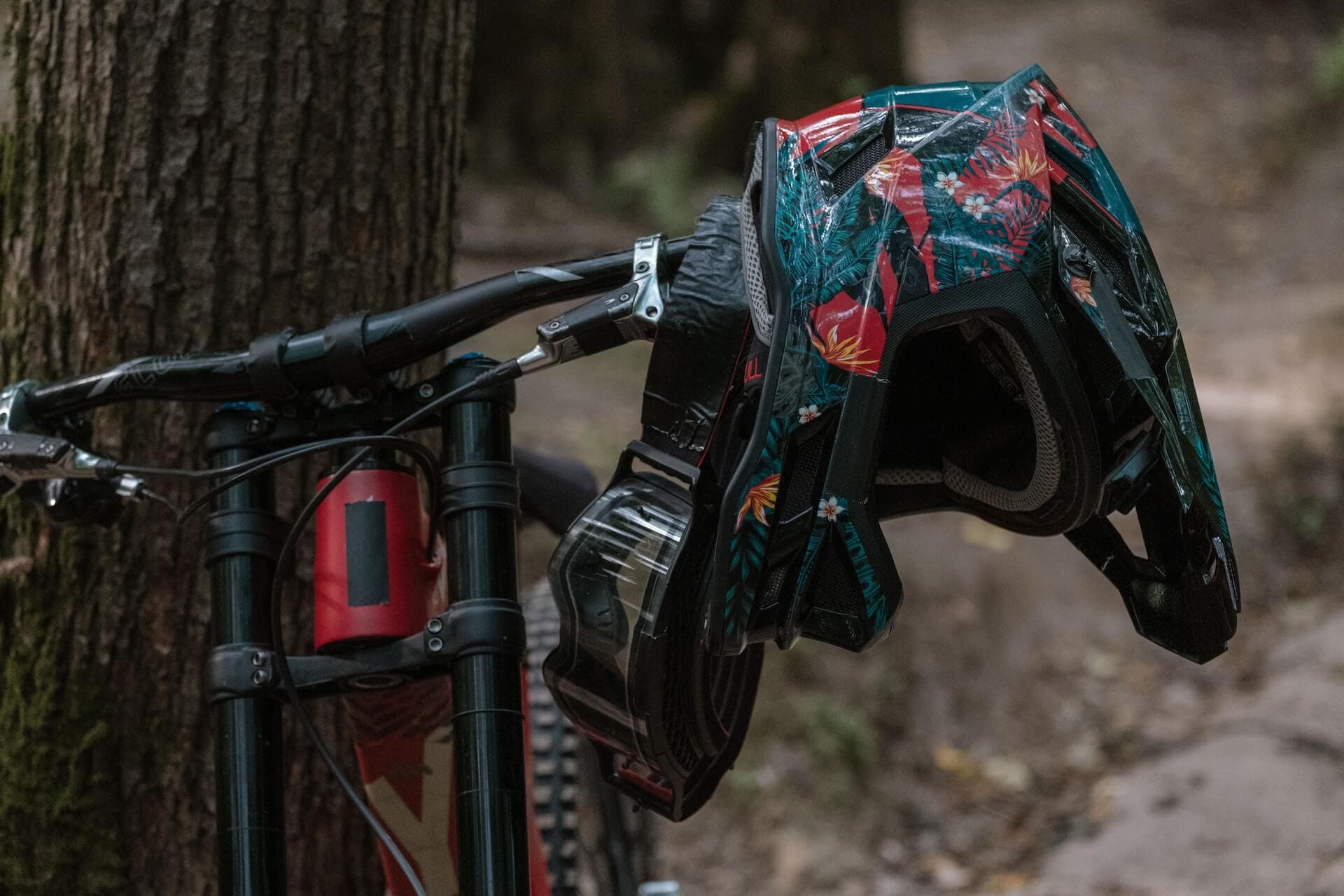
- Bikes, helmets and a repair kit are provided. Bring your own pedals and shoes if you are particular about them.
- Wear padded shorts. Everything else you already own. A breathable top, sunglasses, sun cream.
- Two litres of water minimum. The dry air hides how much you are losing.
- A layer for the passes, even in summer. It is meaningfully colder at 2,000m than in the city.
- Cash for tips. There are no card machines in the valleys.
- Tell us about any dietary requirements when you book, so lunch is right rather than apologetic.
Day tours run every day of the week on a private basis, so there is no fixed departure calendar to work around and no strangers added to make up numbers. Message us with your dates and we will confirm quickly — day trips can usually be arranged with only a few days' notice, unlike the multi-day trips where accommodation needs booking.
Common questions
How fit do I need to be for a day ride?
For the easy–moderate day, if you can ride a bicycle for a couple of hours you will be fine. There is a support vehicle and the pace is yours. The enduro day is a different question entirely and requires real off-road experience on steep, loose terrain.
Can non-riders come along?
Yes. A non-riding partner travels in the support vehicle, meets the group for lunch, and often sees more of the valleys than the riders do. There is no charge structure that punishes this.
What if the weather is bad?
We ride in light rain; it is rarely a problem here. If conditions are genuinely unsafe we move to lower ground, switch to the Agafay, or reschedule. That call is made the evening before rather than at the trailhead.
Is a day tour worth it if I only ride occasionally?
Yes, and it is probably the single best day out available from Marrakech for someone who is reasonably active. Pick the easy–moderate day or the e-bike, tell us honestly what you ride, and the guide will set the pace around you rather than the other way round.