Morocco has thousands of kilometres of unpaved piste that was built for vehicles and is now used by almost nobody. That is the definition of a gravel destination.
Published
Gravel riding in Morocco means piste. The unpaved roads that connect villages the tarmac never reached. There are thousands of kilometres of it in the Atlas alone, it is graded well enough for a Land Cruiser and rough enough to be interesting, and on most of it you will see more mules than cars.
That combination is rare. European gravel is often forestry track shared with walkers, or converted railway. Moroccan piste is functioning rural infrastructure through mountains, and riding it puts you in villages rather than past them.
What the surface is actually like
Four surfaces come up repeatedly, and they demand different things from bike and rider.
| Surface | Where | What it does |
|---|---|---|
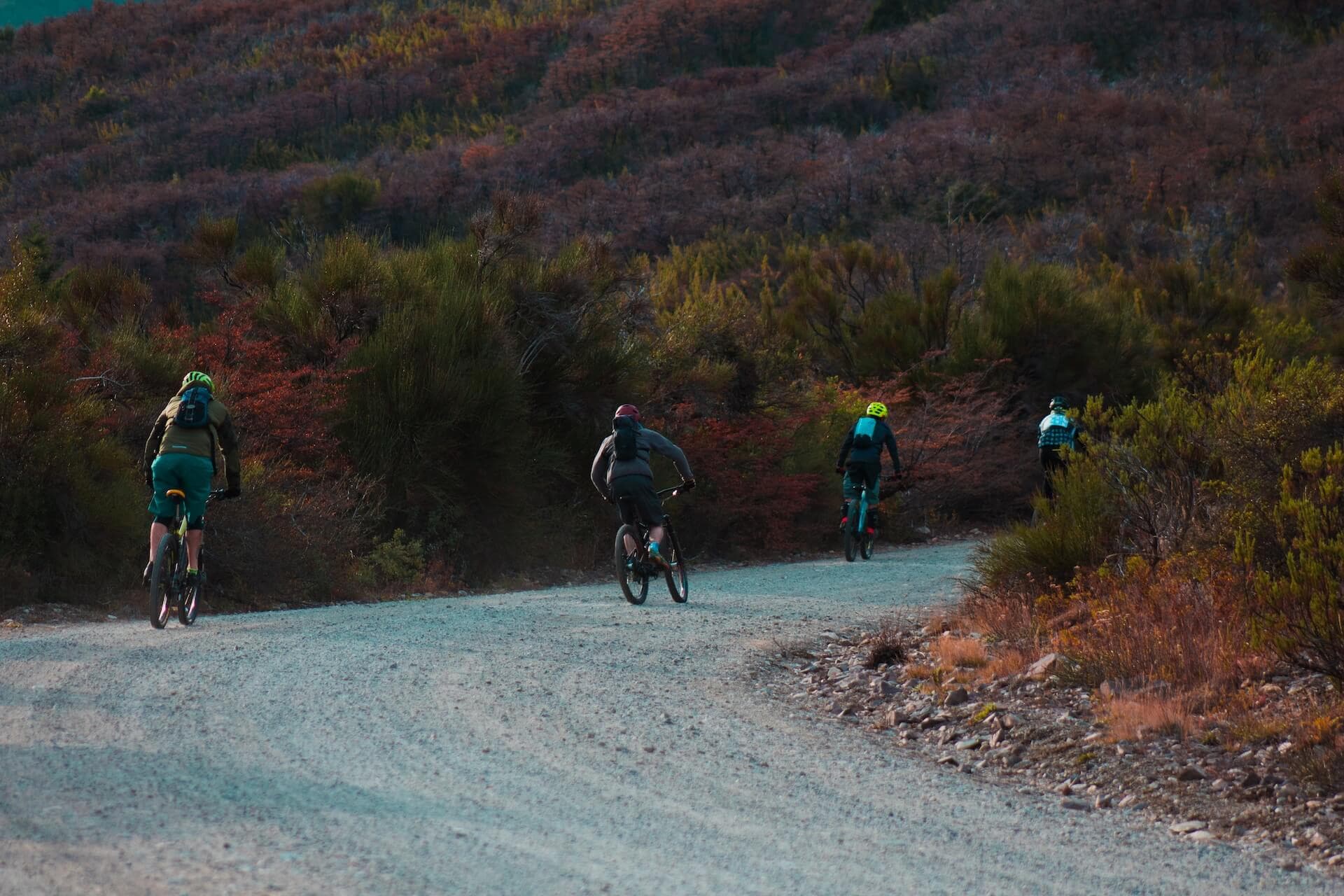
| Graded piste | Kik Plateau, valley connections | Firm, fast, occasional washboard. The best of it rides like fast tarmac with texture. |
| Loose rock over hardpack | Climbs above 1,800m | The default Atlas surface. Fine at speed, awkward on steep gradients where the rear wheel spins. |
| Hamada | Agafay, southern approaches | Stony desert pavement. Fast, unforgiving on thin tyres, punishing on the hands. |
| Riverbed and oued crossings | Everywhere, especially spring | Sand, boulders and water. The one place where wider tyres and lower pressure genuinely decide the outcome. |
What you will not find much of is mud. Outside a handful of wet weeks the ground here is dry, and the failure mode is loose and dusty rather than sticky. That changes tyre choice significantly.
Tyres, which is the whole conversation
Run 45mm at minimum. We set our gravel bikes up on 40–45mm and that is the floor, not the ideal. If your frame takes 50mm, run 50mm. This is not a comfort argument. It is that a 38mm tyre at road pressures on Atlas hamada will find the sharp edge of a stone, and you will spend the afternoon fixing it.
Tubeless, without qualification. The thorns here — acacia and jujube, both common in the low valleys — go straight through a tube and are the single most common cause of a puncture on these routes. Sealant handles them without you noticing. Bring a plug kit for anything the sealant cannot close.
Tread pattern matters less than volume. A fast-rolling file tread with reinforced sidewalls beats an aggressive knobbly with thin casing on nearly every route we run. Sidewall protection is the specification to look for.
The three areas worth riding
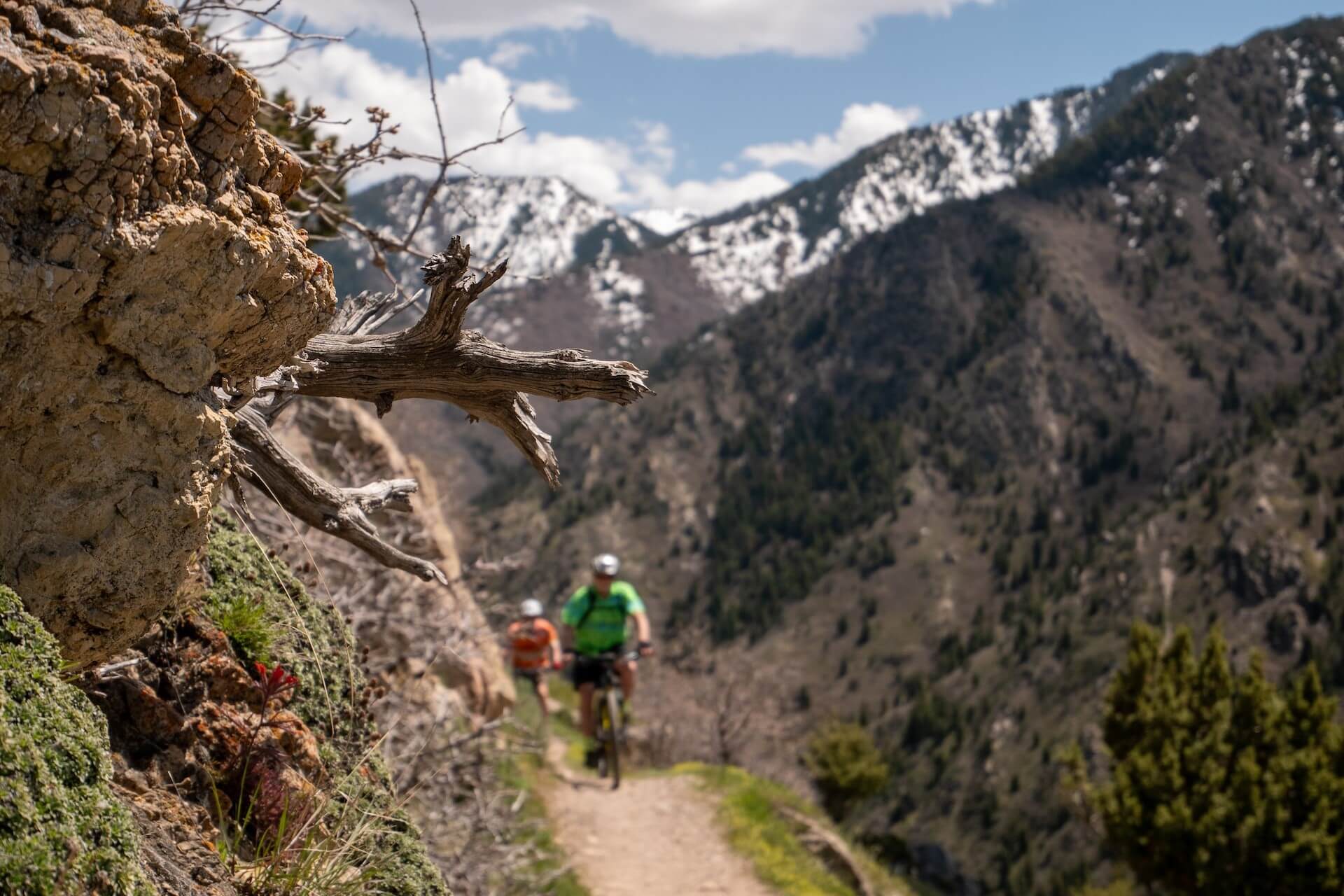
The Kik Plateau is the classic. High open ground between Asni and Ouirgane at around 1,700m, with the entire High Atlas laid out along one side and the Marrakech plain dropping away on the other. It is fast, exposed, largely traffic-free and it is where our 2-day High Atlas gravel bike tour spends its second day. Nothing else near Marrakech gives you that much view for that little technical difficulty.
The Agafay is stony desert forty minutes from the city — not sand dunes, but hamada, a hard stony pavement with the Atlas rising behind it. Startlingly empty, excellent light in the early morning and evening, and rideable when the mountains are under snow. It is the reliable winter option.
The Ouirgane and Amizmiz valleys are the greener middle ground: piste connecting villages through olive terraces and red earth, with the option of tarmac climbs between valleys when you want them. This is where a gravel bike genuinely outperforms a mountain bike, because you are covering distance between places rather than seeking out technical trail.
How it differs from European gravel
Three real differences, beyond the obvious ones of weather and scenery.
The first is water. There is no tap, no café and no shop for long stretches, and the dry air hides how much you are losing. Two litres on the bike is a minimum, and on our tours the vehicle carries more. Riding independently here without planning water is the most common way visitors get into difficulty.
The second is navigation. Piste networks are dense, unsigned, and many tracks on satellite imagery are washed out or lead to a single farm. GPS routes downloaded from the internet are frequently out of date because a spring flood has removed a section. This is the practical argument for a local guide rather than a philosophical one.
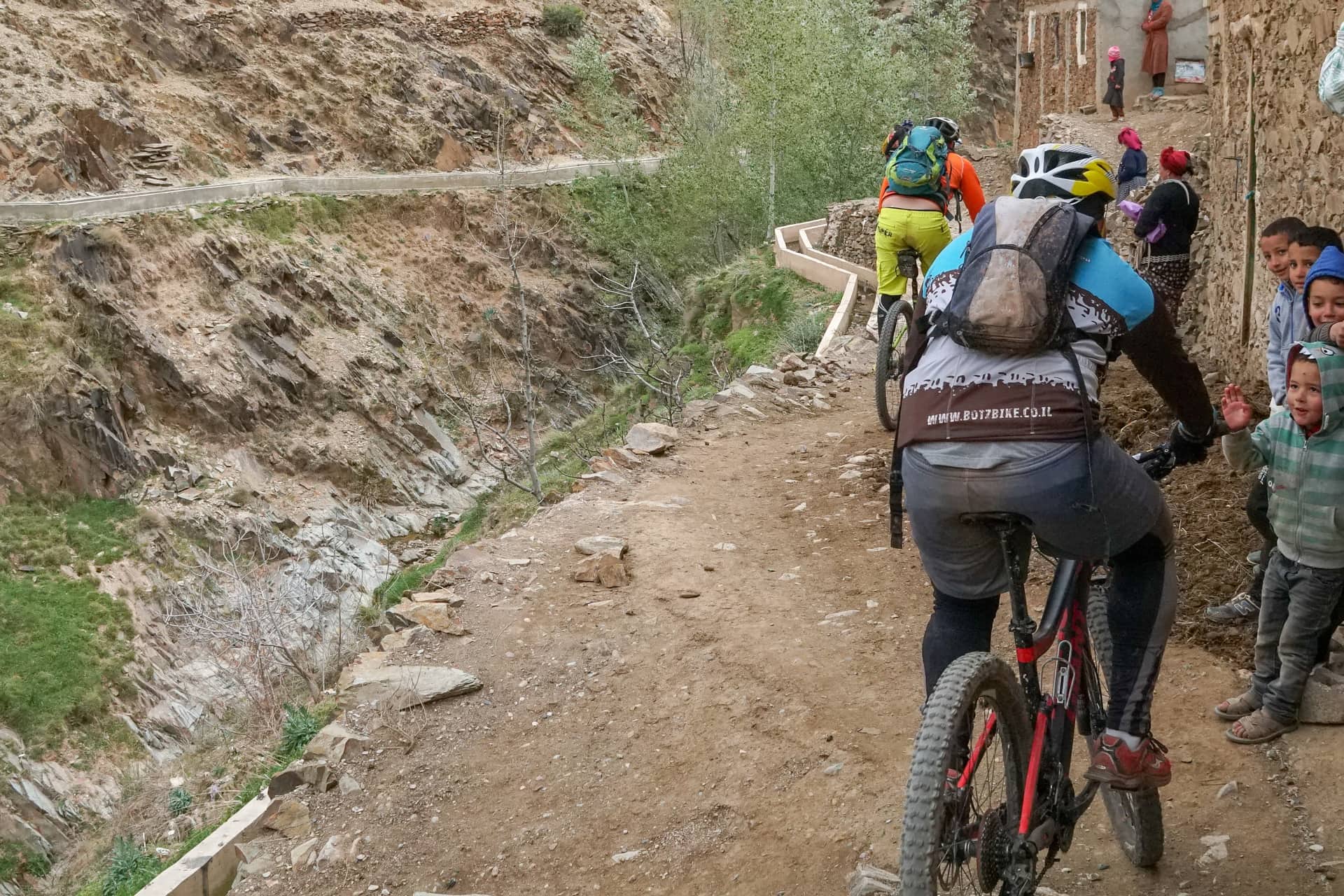
The third is that you are riding through inhabited country rather than wilderness. Every village you pass through is somebody’s home, and the social element of the ride. The greeting, the mint tea, the children running alongside — is not an interruption of the riding. For a lot of people it becomes the point.
Gravel or mountain bike?
Take a gravel bike if you want to cover ground, link valleys, and ride the piste network as it was intended. Take a mountain bike if you want singletrack, mule paths and technical descents. The two experiences overlap less than people expect.
Our gravel routes deliberately favour distance and landscape over technical difficulty, which is why they are graded intermediate rather than advanced. If you want the steep, loose descents, the 8-day Atlas Mountains MTB tour is a completely different proposition on a completely different bike.
One honest note: a hardtail mountain bike with fast tyres is an excellent Morocco gravel bike, and if that is what you own, do not buy anything. The extra volume is worth more here than the drop bars.
When to come
March to May and September to November, for the same reasons as everything else here — climbable temperatures and dry, fast surface. The Agafay extends that in both directions, because it is low, and it is genuinely good riding in December and January when the mountains are shut.
Avoid July and August for anything at low altitude. Hamada at 40°C is not a training opportunity, it is a medical event.
Common questions
Do you provide gravel bikes or should I bring mine?
We run gravel bikes on 40–45mm tyres, geared for Atlas passes rather than flat roads. Bring your own if you are particular about fit — just check your frame clearance and your lowest gear before you commit to it.
Is the Kik Plateau rideable on a road bike?
The tarmac approaches are, and the plateau itself is not. It is graded piste with loose sections. We run road tours on the Atlas passes, which are paved, and gravel tours on the plateau. They are different routes for different bikes.
How much climbing is there on a typical gravel day?
800–1,400m over 50–70km on our routes. The gradients are moderate but sustained, and the surface makes a 6% climb feel like an 8% one. Gear accordingly.
Can I bikepack independently rather than take a tour?
People do, and the Atlas Mountain Race crosses some of this country. The things to solve are water, navigation on an unsigned piste network, and the fact that resupply in the high valleys is unreliable. If you are experienced at self-supported riding, it is a superb destination. If you are not, this is a demanding place to learn.