The accommodation is the thing riders are most uncertain about and least willing to ask. So here is the unvarnished version — including the parts that are genuinely basic.
Published
A gîte is a family home in a mountain village that takes paying guests. Not a hotel, not a hostel, not a guesthouse in the European sense. You sleep in a simple room in somebody’s house, eat what the family cooks, and share a bathroom. It is the best part of a multi-day tour here and it is also the part people are most nervous about, so here is the whole picture.
The building
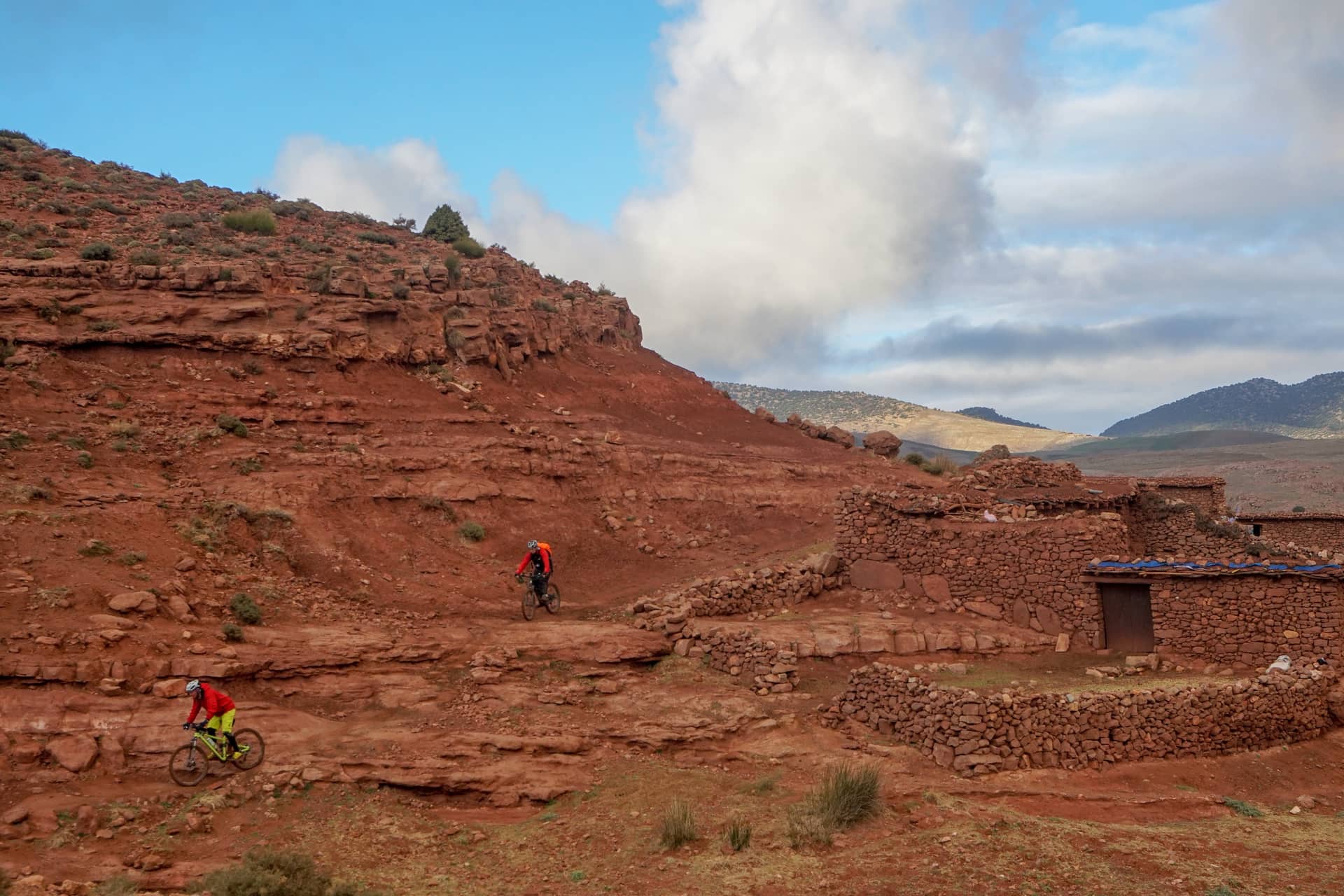
Most gîtes in the High Atlas are built the way everything here is built: pisé, which is earth rammed into timber formwork in layers, or mud brick over a stone footing. Walls are thick, windows are small, ceilings are low, and the whole thing stays remarkably cool in summer and holds heat surprisingly badly in winter.
Inside, expect painted plaster, a communal salon with banquettes around the walls, patterned rugs, and a low round table that everything happens on. There will be a terrace, and the terrace will have the view. That is where you will spend the evening.
The room
Twin or triple rooms as standard, sometimes a shared dormitory-style room in the smaller gîtes. Foam mattresses on a low base or on the floor, heavy wool blankets, clean sheets. Sparse. A room here is for sleeping in, not sitting in, because the salon is where people sit.
Single rooms are usually available for a supplement, but in the smallest villages they genuinely may not exist. We will tell you before you book if a particular night on your itinerary cannot offer one.
Bathrooms and hot water. The honest part
Bathrooms are usually shared and they are functional rather than pleasant. Expect a Western-style toilet in most gîtes we use, though squat toilets still exist in the smaller ones. Bring your own toilet paper as a habit; it is often provided, and occasionally it is not.
Hot water exists but is finite. It is typically heated by a gas bottle or a solar panel, which means the first two people to shower get a hot shower and the fifth may not. On a riding trip where everybody arrives dusty at the same time, this is a real constraint. Our guides sort out an order, and it is worth being the person who offers to go last on the first night and first on the second.
Some gîtes elsewhere in the Atlas charge a euro or two for a hot shower. On our tours that is covered. You will not be asked for money for washing.
The food, which is the best part
Dinner is cooked by the family, usually by the women of the household, and it is consistently the best food of the trip. A tagine — chicken with preserved lemon and olives, lamb with prunes and almonds, or a vegetable one — cooked slowly in a clay pot over gas or charcoal. Bread baked that day. Soup first if it is cold. Fruit after.
Friday is often couscous, which is the family meal of the week rather than a tourist dish. If your trip includes a Friday in a village, you are getting something that is genuinely a household occasion.
Vegetarians eat extremely well here — Moroccan cooking is full of vegetable dishes that are not compromises. Coeliac and severe nut allergies need more notice, because bread and almonds are structural to the cuisine and we brief every household individually. Tell us when you book, not on the day.
The evening
There is nothing to do, and that turns out to be the point. No bar, no wifi worth the name, no television in most. What happens instead is that a group of riders who spent the day strung out along a trail end up in one room together, and the conversation is better than it would be anywhere with a distraction in it.
Then the generator goes off and it is extremely dark and extremely quiet, and you are asleep by half past nine. Riders consistently name this as the thing they did not expect to remember.
Etiquette that actually matters
- Shoes off at the door of the salon. Always. Watch what your guide does.
- Eat with your right hand if you are eating from a communal dish. The left is considered unclean.
- Eat from the wedge of the dish in front of you rather than digging across the middle.
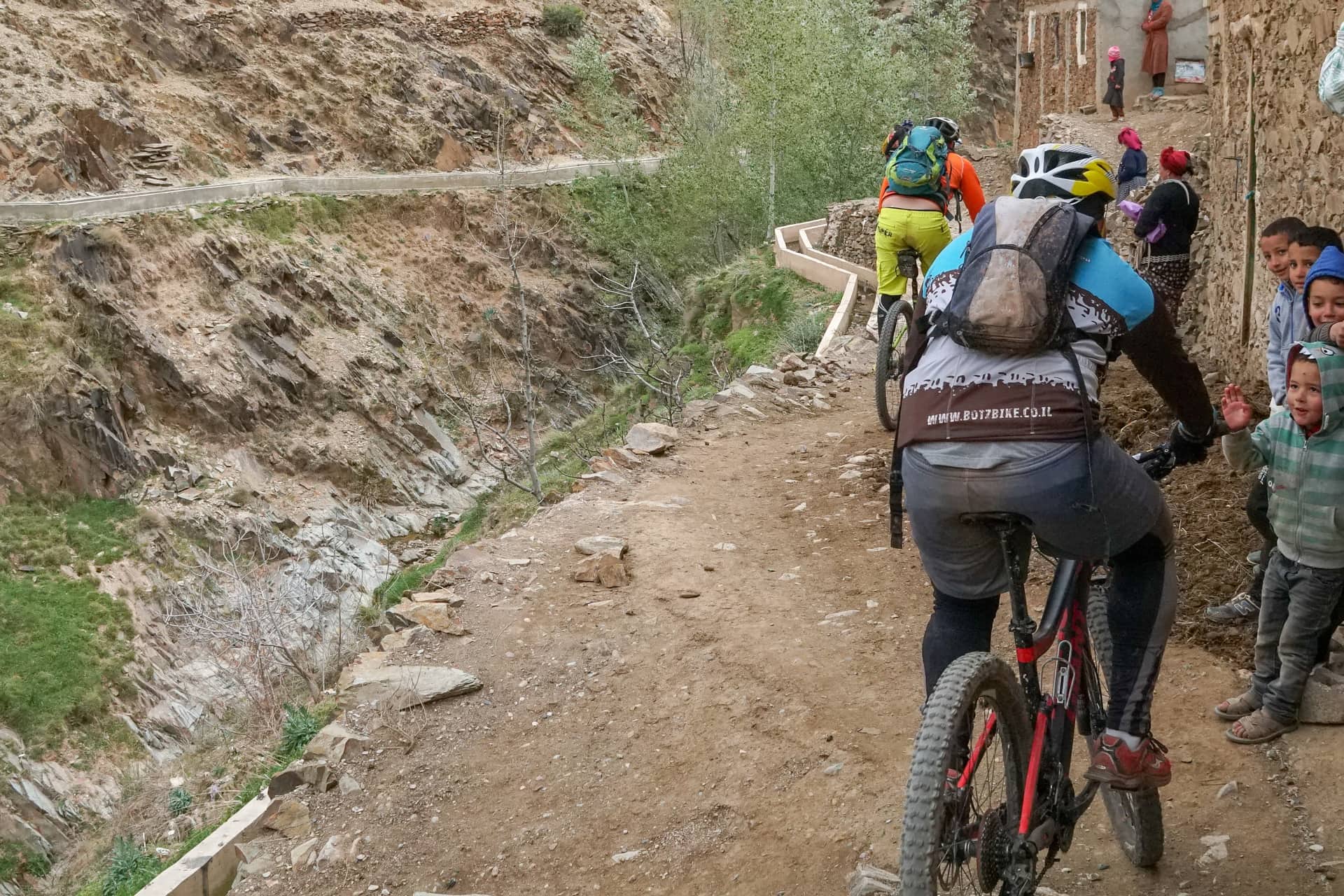
- Ask before photographing anyone, especially women. A camera pointed at somebody’s family in their own home is different from a camera pointed at a landscape.
- Dress modestly in and around the house — shoulders and knees covered. Cycling kit is fine on the bike; change when you arrive.
- Alcohol is not part of village life and is not served. Bringing your own into a family home is poor form. Have a drink in Marrakech at the end.
Who the money reaches
This is worth saying plainly, because it is the strongest argument for this kind of accommodation over a mountain hotel. When you stay in a gîte, the payment goes to the household that owns it. The cook is a member of that family. The food was mostly bought in the valley. The muleteer, if your route uses mules, lives in the next village.
Small groups matter here for the same reason. A village of two hundred people can absorb six riders in a way it cannot absorb sixty, and the difference between those two numbers is the difference between tourism that supports a valley and tourism that overwhelms it.
Should you be worried?
If your standard is a hotel, a gîte will disappoint you on bathrooms and delight you on everything else. If you have stayed in mountain huts anywhere in the world, this is more comfortable than most of them and the food is dramatically better.
If you genuinely want a private bathroom and reliable hot water every night, say so and we will build a trip around guesthouses and small hotels in Ouirgane and Imlil instead. That is a legitimate preference and our private and custom bike tours exist partly to accommodate it. But we will gently suggest one gîte night, because it is the night you will talk about afterwards.
Common questions
Is there wifi in the gîtes?
Sometimes, and it is usually slow. Mobile data works in most valleys we ride in, though not all. The Azzaden is patchy and the upper Imenane can drop out entirely. Treat a multi-day tour as time offline and tell people at home that in advance.
Can I charge my phone, lights and GPS?
Yes, but sockets are limited and power may only run at certain hours. Bring a power bank, and a European two-pin plug adapter. If you are on an e-bike, we charge the batteries. That is our problem, not yours.
How cold does it get at night?
Colder than people expect. Mountain gîtes sit at 1,400–1,800m and a spring or autumn night can drop close to freezing even after a 25°C day. Blankets are provided and are heavy and warm. Bring a base layer to sleep in for March, April, October and November.
Are gîtes suitable for families with children?
Very. Moroccan households are used to children and yours will be looked after with more warmth than in any hotel. The shared bathroom is the only real consideration.