The Atlas is a range of long climbs and short descents. That single fact decides this question for most people — and not always in the direction they expect.
Published
Choose an e-MTB if you want to spend your energy on the descents and the villages rather than the climbs, if your group has mixed fitness, or if you have limited days and want to cover more ground. Choose a normal mountain bike if the climbing is the point, if you ride regularly at home, or if you want the most technical descents we run.
That is the honest summary, and it will suit most people. The rest of this explains why the Atlas in particular pushes more riders towards electric assistance than a European trip would, and where an e-bike is genuinely the wrong answer.
The Atlas has a specific shape, and it matters
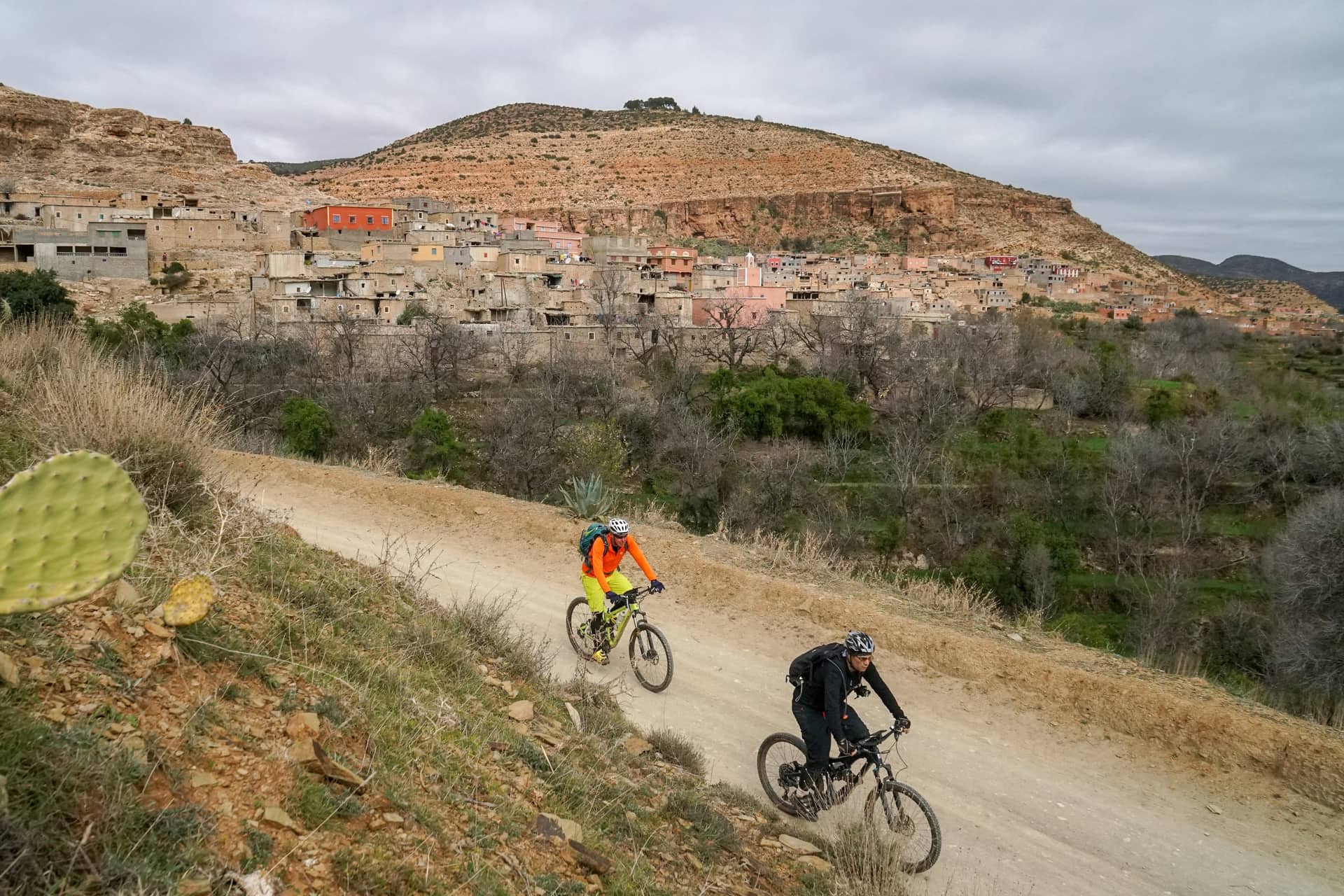
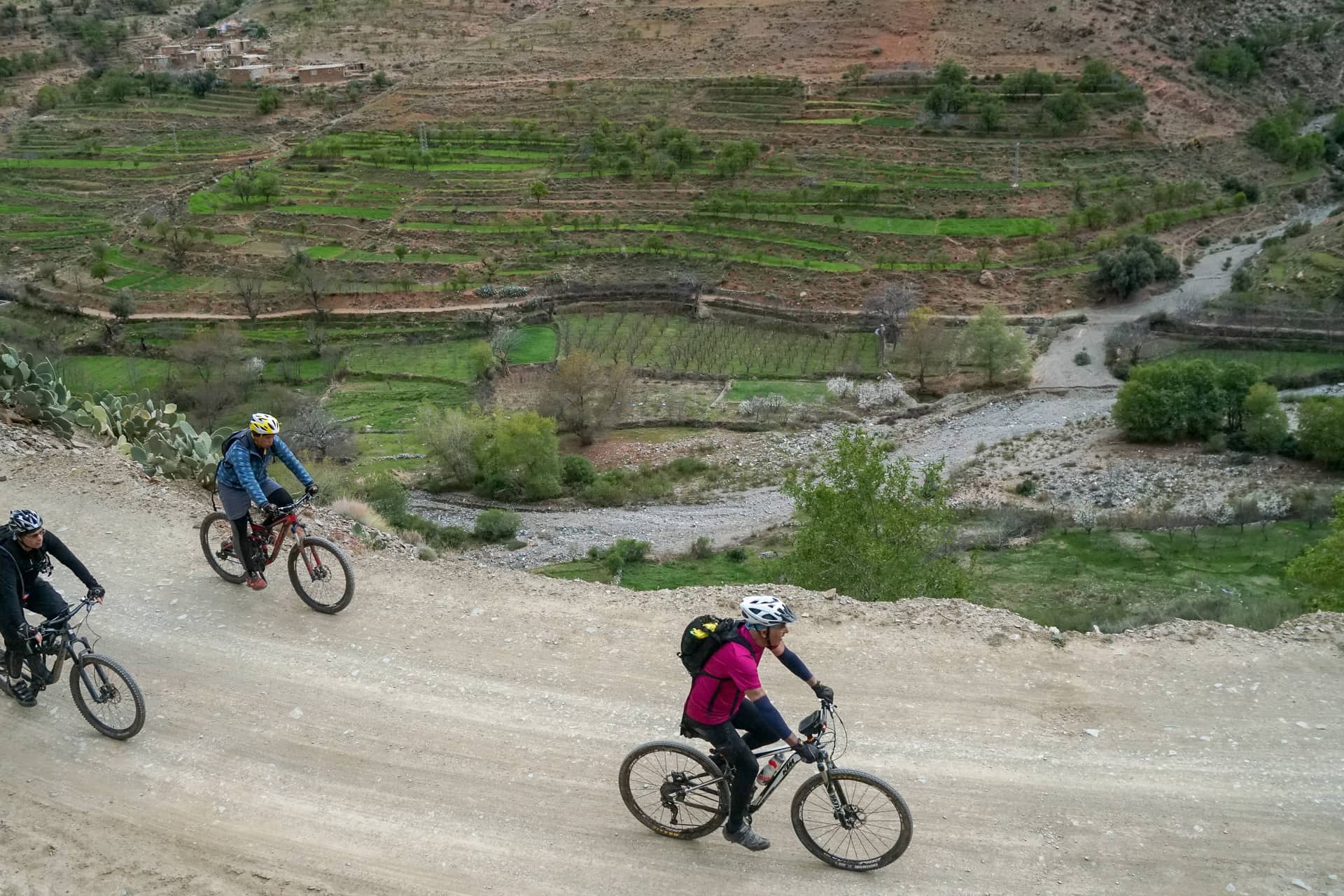
The High Atlas is not rolling country. From Imlil at 1,740m, the passes sit between 2,100m and 2,660m, and the climbs to reach them are long, sustained and often on loose surface. A typical riding day here is one or two big climbs and one or two long descents, rather than the constant up-and-down of a trail centre.
That shape is exactly what electric assistance is good at. The motor flattens the part of the day that is effort without much reward, and leaves the part you came for untouched. A descent is a descent whether or not there is a battery on the downtube. On a range shaped like the Alps, where climbs are shorter and more frequent, the argument is weaker. Here it is strong.
What you actually give up on an e-bike
Operators tend to sell e-bikes as pure upside. They are not. Four honest trade-offs:
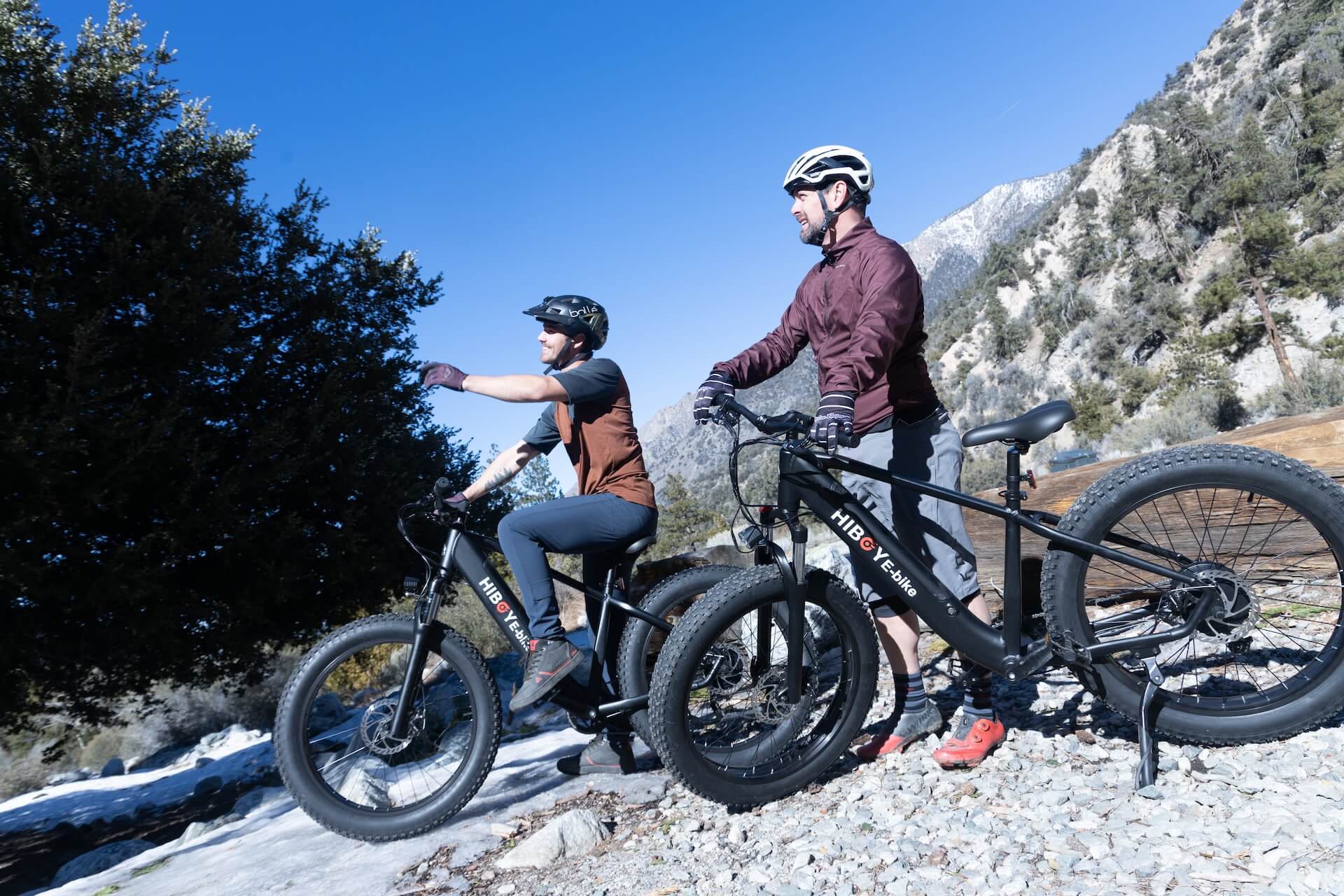
- Weight. An e-MTB is 22–25kg against 13–15kg for a trail bike. On tight, technical singletrack that weight is felt in direction changes, and on genuinely steep, loose descents it takes more managing.
- Hike-a-bike. Some of our routes involve short carries. The enduro trip has a ten-minute one, and on the Tizi Tzikerte crossing the bikes go over by mule. Carrying 24kg up a rocky pass is not the same job as carrying 14kg.
- Range anxiety, if the operator is careless. A 625Wh battery does an Atlas day comfortably in the right mode, but a rider who leaves it in Turbo all morning will not finish the afternoon. Ours carry spares in the vehicle, which removes the problem entirely.
- Cost. e-MTB hire sits at the top of the hire range, and the tours themselves price slightly higher because the bikes cost more to buy and maintain.
Where the e-bike is clearly right
There are three situations where we will actively recommend electric assistance rather than just offer it.
The first is mixed-ability groups. A couple where one rides seriously and one does not, a parent and an adult child, a group of friends with a fifteen-year fitness spread. These trips fail on normal bikes because someone spends the week either waiting or suffering. Put the less-fit rider on an e-bike and the group rides together. This is the single most common reason our clients switch, and it works.
The second is limited time. If you have three days rather than eight, assistance lets you reach the good riding faster and see three valleys instead of one. Our 3-day Atlas Mountains e-bike tour covers ground that would take five days unassisted.
The third is heat. If you are riding in June or September, when valley temperatures reach the low thirties, the motor is what stops a long climb becoming a genuine health problem rather than just hard work.
Where the normal bike is clearly right
If you ride at home most weekends and the climbing is part of what you enjoy, take the normal bike. You will get more out of the descents, the bike will do what you ask on the technical sections, and you will finish the week with the specific satisfaction that comes from having earned the view.
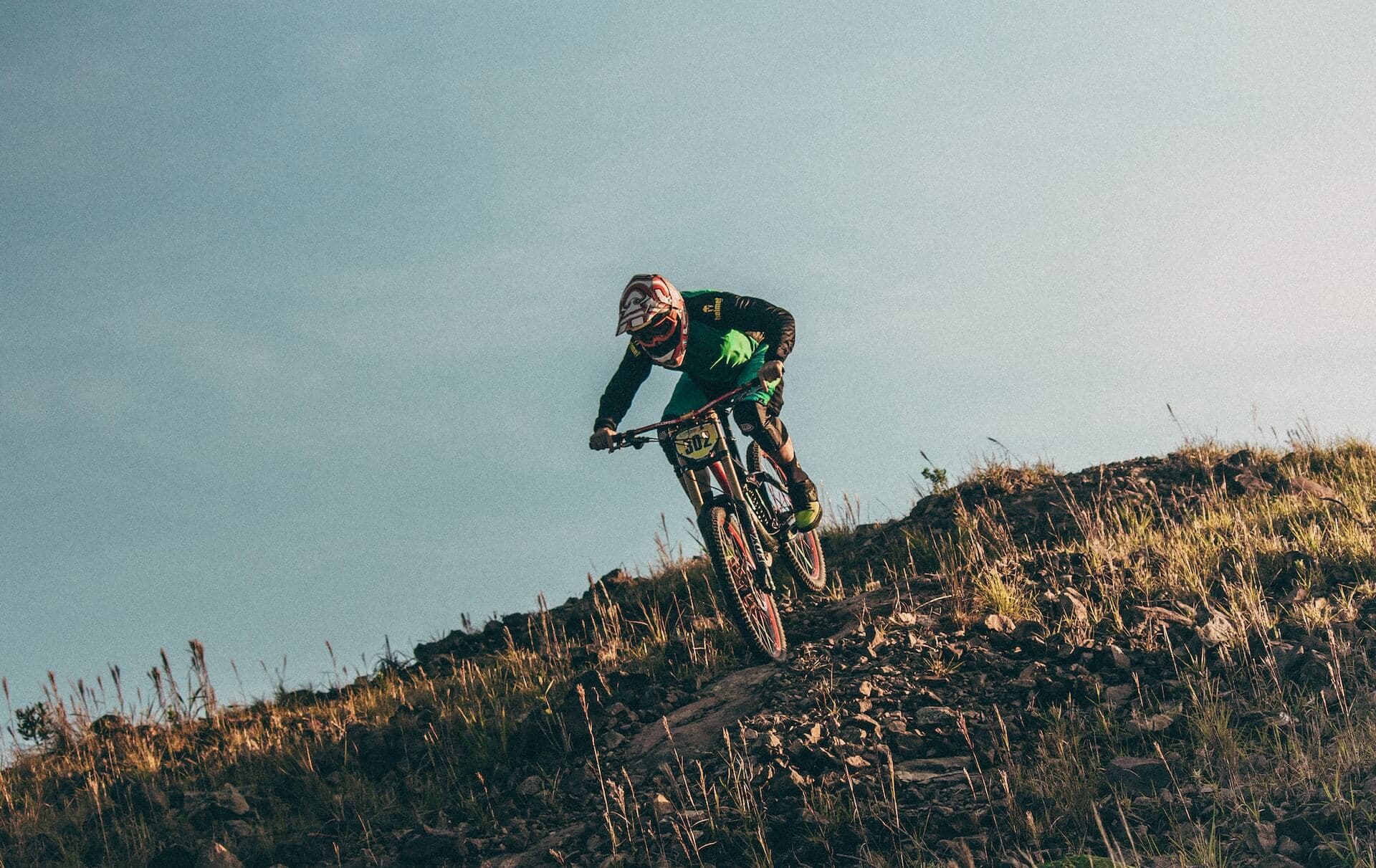
The same applies if you want the hardest riding we run. Our 8-day Morocco enduro MTB tour is graded advanced, involves genuinely steep and exposed terrain, and we run it on 160–170mm enduro bikes for a reason. There is an argument for e-enduro on that terrain and we are not making it here. The descents are the whole point of that trip and a lighter bike rides them better.
Straight comparison
| e-MTB | Trail / enduro MTB | |
|---|---|---|
| Weight | 22–25kg | 13–16kg |
| Typical daily distance | 35–50km | 25–40km |
| Climbing effort | Moderate. You still pedal | The main effort of the day |
| Best on | Long fire-road climbs, mixed groups | Technical singletrack, steep descents |
| Hire cost per day | Top of the range | Mid range |
| Fitness needed | Able to ride a bicycle comfortably | Regular riding, 30km+ off-road days |
| Handles hike-a-bike | Harder, real weight | Manageable |
A note on what e-bikes are not
They are not motorbikes and they are not effortless. Every e-MTB we run is pedal-assist, which means the motor contributes only while you are pedalling and cuts out at 25km/h. You will still finish an Atlas day tired. What changes is which part of the day tires you, and whether you have anything left for the descent.
They also require the same skills going down. Assistance does nothing on a descent, so if you are nervous on loose rock, an e-bike does not solve that. The right tour grading does. If you are new to off-road riding, tell us and we will point you at the beginner-graded trips rather than selling you a battery and hoping.
Finally, they are not cheating, and nobody here thinks they are. Our guides ride both. The person who has the best day is the person on the right bike for their fitness, and there is no prize for arriving exhausted.
Common questions
What range do the batteries give in the Atlas?
A 625Wh battery covers a full Atlas riding day — 35–50km with 800–1,200m of climbing — in Eco and Tour modes. Sustained Turbo on long climbs will empty it faster. We carry charged spares in the support vehicle on every departure, so range has never ended a day for us.
Can I switch bikes mid-tour?
On most tours yes, if we know in advance so the right bike is in the vehicle. People occasionally start on a trail bike, find the climbs harder than expected, and move to an e-MTB for the rest of the week. That is a normal thing to do, not a failure.
Do e-bikes work on singletrack or only fire roads?
They work on both. The difference is felt on tight, technical singletrack where the extra weight makes quick direction changes harder. On flowing singletrack and dirt roads, which is most of what the Atlas offers, there is very little in it.
Is an e-bike allowed everywhere a normal bike is?
In the High Atlas, yes. These are mule paths and village tracks with no trail-access restrictions on motor assistance. That is not true everywhere in the world, but it is true here.