March to May and September to November are the honest answer. But the range is big enough that there is good riding in every month if you know where to go — and two months you should genuinely avoid.
Published
The best time for mountain biking in Morocco is March to May and September to November. Those two windows give you the combination that matters — trails that are dry but not baked, temperatures you can climb in, and long enough days to ride five or six hours without rushing.
That is the short answer, and most operators stop there. But the High Atlas spans nearly 3,000 metres of altitude within an hour of Marrakech, and that changes the answer depending on where in the range you ride. Here is what each part of the year is actually like.
Spring: March, April, May
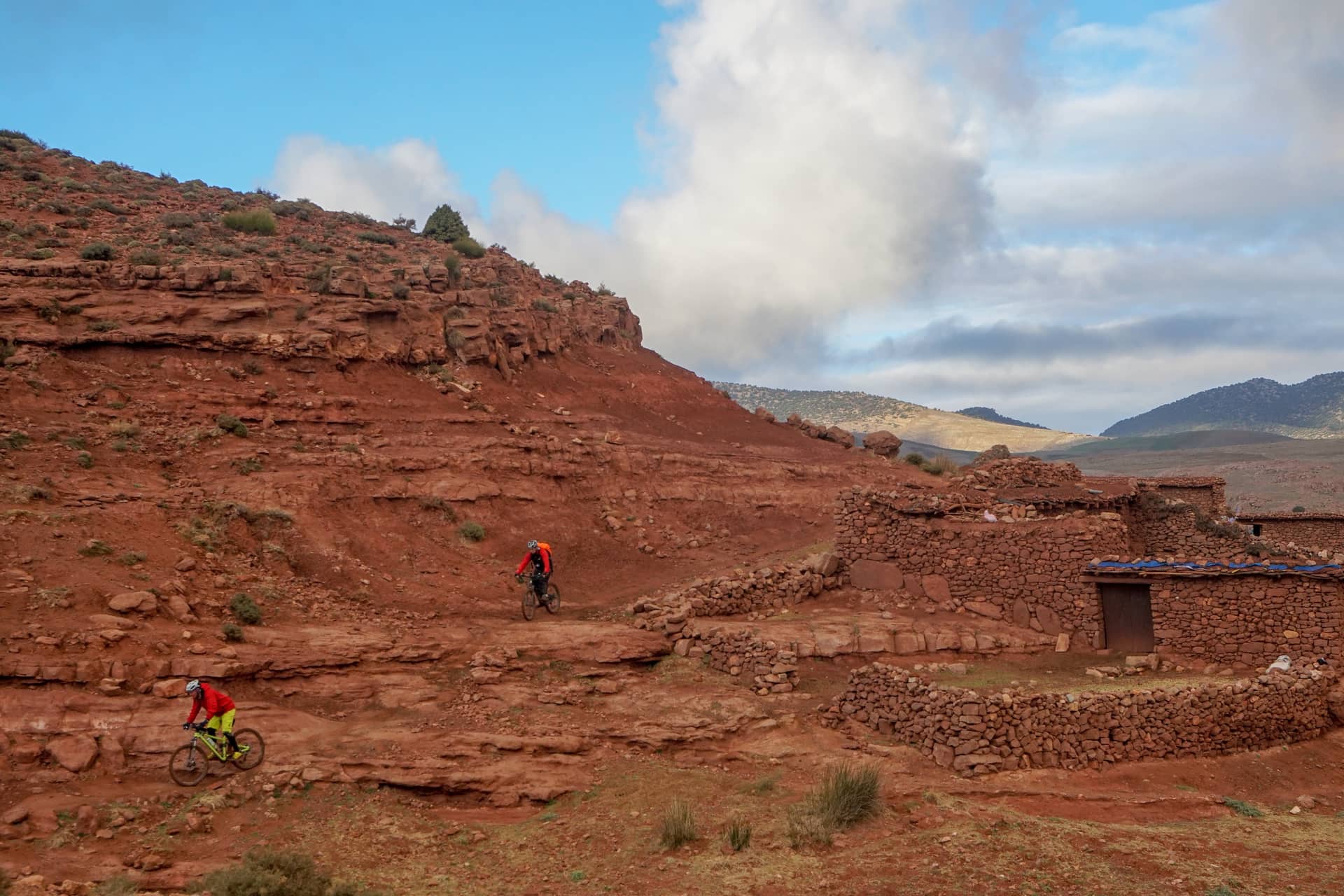
The best riding of the year, and the busiest. Snowmelt fills the rivers, the valleys turn green, walnut and cherry come into leaf, and there is still snow on Toubkal and the high peaks as a backdrop. Daytime temperatures in the valleys run 18–25°C, which is close to ideal for climbing.
The catch is that high passes can still hold snow into early May in a heavy year. The Tizi n'Tamatert at 2,300m is usually clear by mid-March, but Oukaimeden at 2,660m can be unrideable into April. We check the passes weekly through spring and reroute rather than cancel.
Summer: June, July, August
June is rideable and often excellent, particularly at altitude. July and August are genuinely too hot for multi-day riding in the low valleys — Marrakech regularly exceeds 40°C and the Agafay is worse. We do not run multi-day trips in those months and we would tell you not to book one.
What does work in high summer is altitude and early starts. A day ride from Imlil at 1,740m climbing to the Tizi n'Tamatert is perfectly comfortable at 7am, and the temperature drops roughly 6°C for every 1,000m you climb. Riders who come in August ride from 6.30am and are off the bike by noon.
| Month | Valley temp | Trail condition | Verdict |
|---|---|---|---|
| March | 16–22°C | Damp early, drying | Very good, passes may hold snow |
| April | 18–25°C | Excellent | Best month overall |
| May | 22–28°C | Excellent, dry | Best month for high routes |
| June | 26–33°C | Dry, dusty | Good at altitude, early starts |
| July | 33–42°C | Very dry, loose | Day rides only, high only |
| August | 33–42°C | Very dry, loose | Day rides only, high only |
| September | 27–34°C | Dry, fast | Good, improving through the month |
| October | 22–29°C | Excellent, fast | Best month for speed |
| November | 17–24°C | Excellent | Very good, quiet |
| December–February | 10–18°C | Cold high, good low | Underrated below 1,800m |
Autumn: September, October, November
If spring is the prettiest, autumn is the fastest. The trails have had a long dry summer to compact, the dust has settled after the first rains, and the riding is quick. October in particular is superb — warm but not hot, stable weather, and the light in the valleys in the late afternoon is the best of the year.
November is quieter and cooler, and we think underrated. You get the same trail quality with fewer people in the gîtes and better prices on accommodation.
Winter: December, January, February
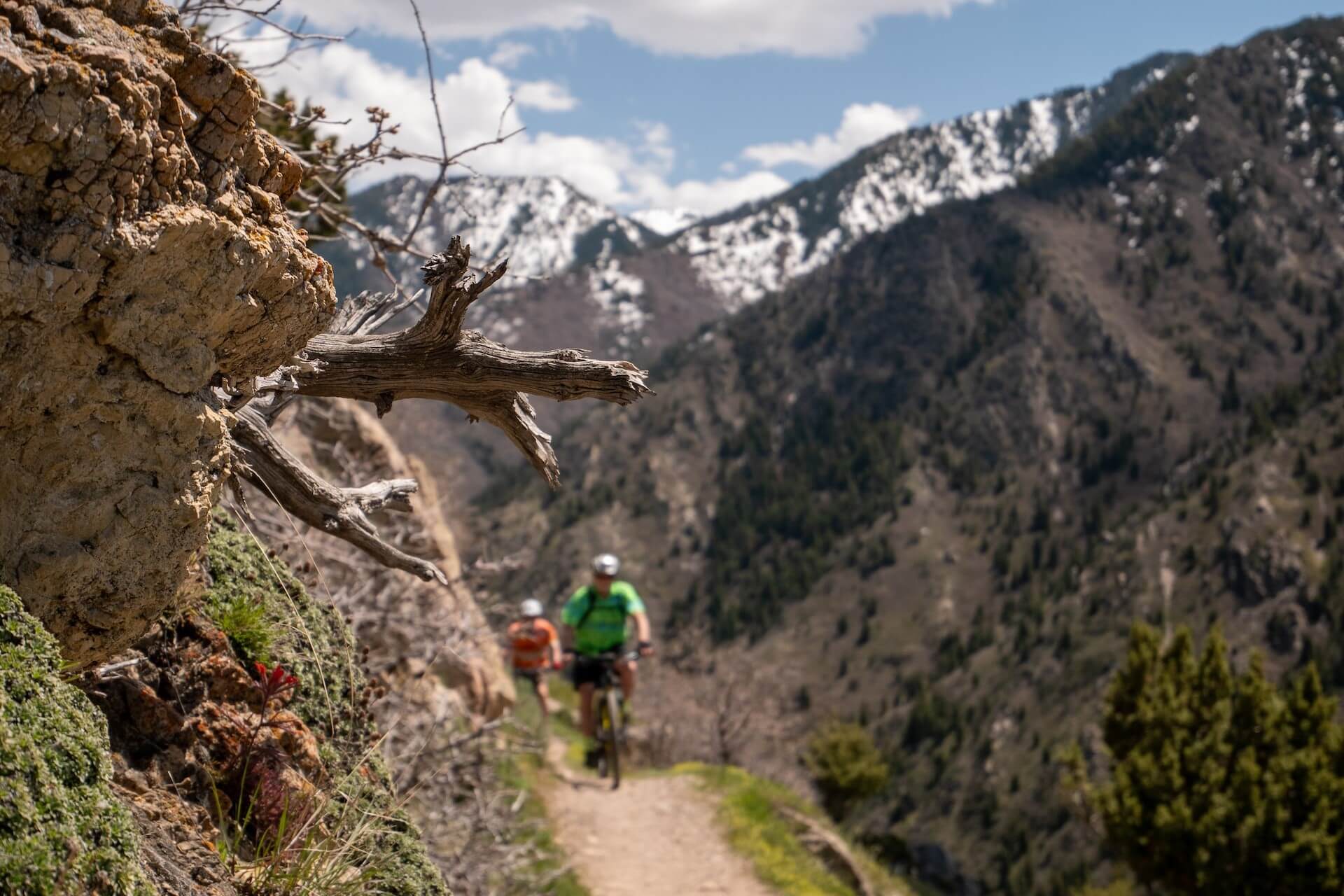
Most people write winter off, and they are wrong to. Below about 1,800m the valleys are cold, clear and completely rideable — 10–18°C in the day, which is comfortable climbing weather. The snow sits on the peaks above you as scenery rather than as a problem.
What you lose is the high terrain and the daylight. Sunset is around 5.30pm, so days are shorter and multi-day trips cover less ground. What you gain is quiet. You will not see another group.
What about rain?
Morocco is dry, and the Atlas gets most of what falls between November and March. Even then it is usually short and heavy rather than persistent. We ride in light rain without a problem. What we do watch for is flash flooding in the dry riverbeds we use as trails. A storm 20km up the valley can put water through a wadi that was bone dry an hour earlier, and that is a decision the guide makes on the day.
So when should you book?
If you have a free choice: late April or early October. If you want the high enduro terrain and the technical passes: May, June or September. If you want the valleys to yourself and do not mind short days: November or February. And if your only option is July or August, come for day rides at altitude rather than a multi-day trip.
At a glance
| Month | Valley temp | High passes | Verdict |
|---|---|---|---|
| January | 12–18°C | Snow | Low valleys and Agafay only. Quiet and green. |
| February | 14–20°C | Snow | Underrated. Green valleys, nobody about. |
| March | 18–24°C | Clearing | Season opens. Rivers full, wildflowers. |
| April | 20–26°C | Mostly open | Among the best. Book early. |
| May | 24–30°C | Open | Excellent. Everything rideable. |
| June | 28–34°C | Open | Ride high or ride early. |
| July | 35–42°C | Open | Too hot below 2,000m. High day rides only. |
| August | 35–42°C | Open | Same. Avoid multi-day trips. |
| September | 28–34°C | Open | Season reopens. Fast dry trails. |
| October | 22–28°C | Open | Among the best. Book early. |
| November | 18–24°C | Closing | Quiet, beautiful, shorter days. |
| December | 13–19°C | Snow | Low routes. Cold evenings. |
How the season changes which tour suits you
The month you can travel should influence which trip you book, not just when you book it. In deep winter the high passes are shut, so a route built around Oukaimeden or the Tizi n'Tamatert simply cannot run — but the Kik Plateau and Agafay gravel routes are at their best, because they sit low and dry.
In high summer the logic inverts. Low valleys are unpleasant by ten in the morning, so the sensible trips are short, high and early — which is exactly what the day tours from Marrakech do. In the shoulder months everything is open, and that is when the long point-to-point routes that cross from the mountains to the coast make most sense, because you are riding through several climate zones in one week and need all of them to be behaving.
Common questions
Is it too hot to cycle in Morocco in summer?
In the low valleys and Marrakech, yes — July and August regularly exceed 40°C and we do not run multi-day tours then. At altitude it is manageable if you start early. A day ride from Imlil at 1,740m climbing towards 2,300m is comfortable before noon even in August.
Does it snow in the Atlas Mountains?
Yes, substantially. Oukaimeden at 2,660m is a working ski station, and the high passes hold snow from roughly December to April. Below 1,800m snow is rare and does not last.
Which month has the best trail conditions?
October. The trails have compacted over the dry summer, the first light rains have laid the dust, and temperatures are warm without being hot. May is a close second and gives you greener valleys.
How far ahead should I book for April or October?
Six to eight weeks for those two months. They are the busiest and the village gîtes in the popular valleys have limited beds. Other months, three to four weeks is comfortable.